Έρευνα
Finding a Voice: New Communication Tools Changing Lives in 2026
15.06.2026 · Dan Marino Foundation
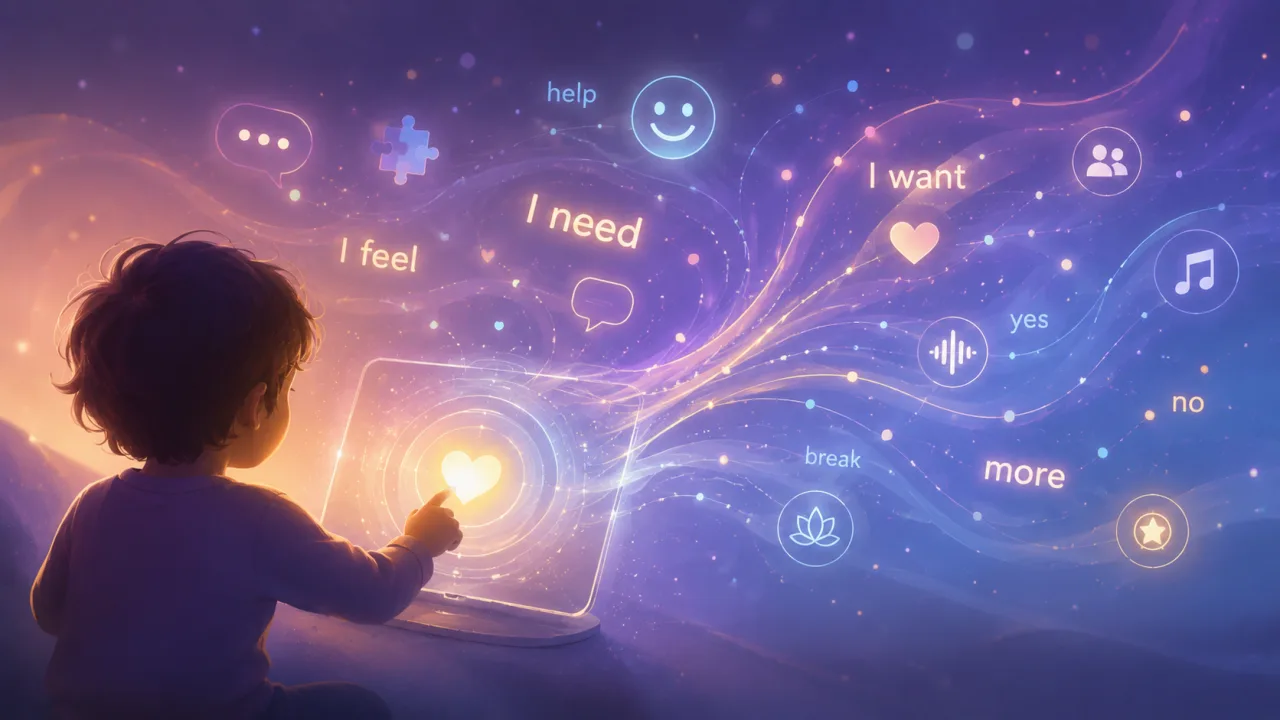
There is a moment every parent remembers - the moment when your child, who struggles to speak, found a way to say something. Maybe it was with a picture, maybe with a communication board, and maybe now - with a smart app on a tablet. In 2026, the world of augmentative and alternative communication tools - known as AAC - has undergone a quiet but profound revolution. More and more families are discovering that this technology not only helps non-speaking children, but supports a much wider range of people on the spectrum.
So what exactly has changed? According to up-to-date reviews from 2026, the field no longer focuses only on classic picture boards. Today, advanced apps like Proloquo2Go, TouchChat, and TalkTablet PRO offer thousands of words and symbols, natural synthetic voices, and full personalisation for each user. Artificial intelligence is entering this space too - new tools can learn a child's patterns and suggest words even before they have chosen them. One key point: all experts agree that AAC tools do not delay speech development - on the contrary, they most often support it.
An important shift in recent years is the growing understanding that augmentative communication tools are not only for children who do not speak at all. Children and adults who do speak, but struggle with social conversation, navigating complex discussions, or expressing their needs at work or at school - they too can benefit enormously from these tools. The best apps of 2026 are designed with careful attention to privacy, adapted for sensory sensitivities, and allow parents and therapists to track progress over time. The global AAC market is currently valued at nearly 1.5 billion dollars and is expected to grow rapidly - which explains the expanding variety of available tools.
The Israeli reality is that some of these apps are available and functional in Hebrew, but a gap remains: not all health funds cover these tools, and not every speech therapist specialises in them. The first step is to speak with a communication clinician who knows the AAC world, to try different tools together with the child, and not to give up after the first attempt. Every child is a world unto themselves, and a tool that works for one does not necessarily work for another.
At the AUTIFACE community, we believe that every person on the spectrum deserves a voice - and we are exploring how technology can help them express it. If you have tried augmentative communication tools with your child, share your experience with us. What you have learned is worth its weight in gold to families just starting out on this journey.
If your child struggles to express themselves, AAC tools - augmentative and alternative communication - can open a new door; ask the speech therapist supporting you about the latest options available today.
Τι σημαίνει αυτό για σένα
AAC tools in 2026 offer your child - whether speaking or non-speaking - a new way to express themselves, and it is worth asking your speech therapist right now about the options that are right for them.
Πηγή: Dan Marino Foundation
Διάβασε επίσης
 🤖 Το 2040: Όταν οι μηχανές αντικαταστήσουν τους ανθρώπους - ποια θα είναι η θέση μας στον νέο κόσμο;
›
 «Θέλω να διασκεδάσω, αλλά με ανθρώπους»: Ένα κοινωνικό κλαμπ στη Βοστώνη για ενήλικες στο φάσμα
›
 Το αεροδρόμιο του Μπέρμιγχαμ μοιράζει αισθητηριακά κιτ στους επιβάτες του φάσματος
›