Research
The Robot That Teaches Kids on the Spectrum - and Never Judges
15.11.2026 · Autism Research
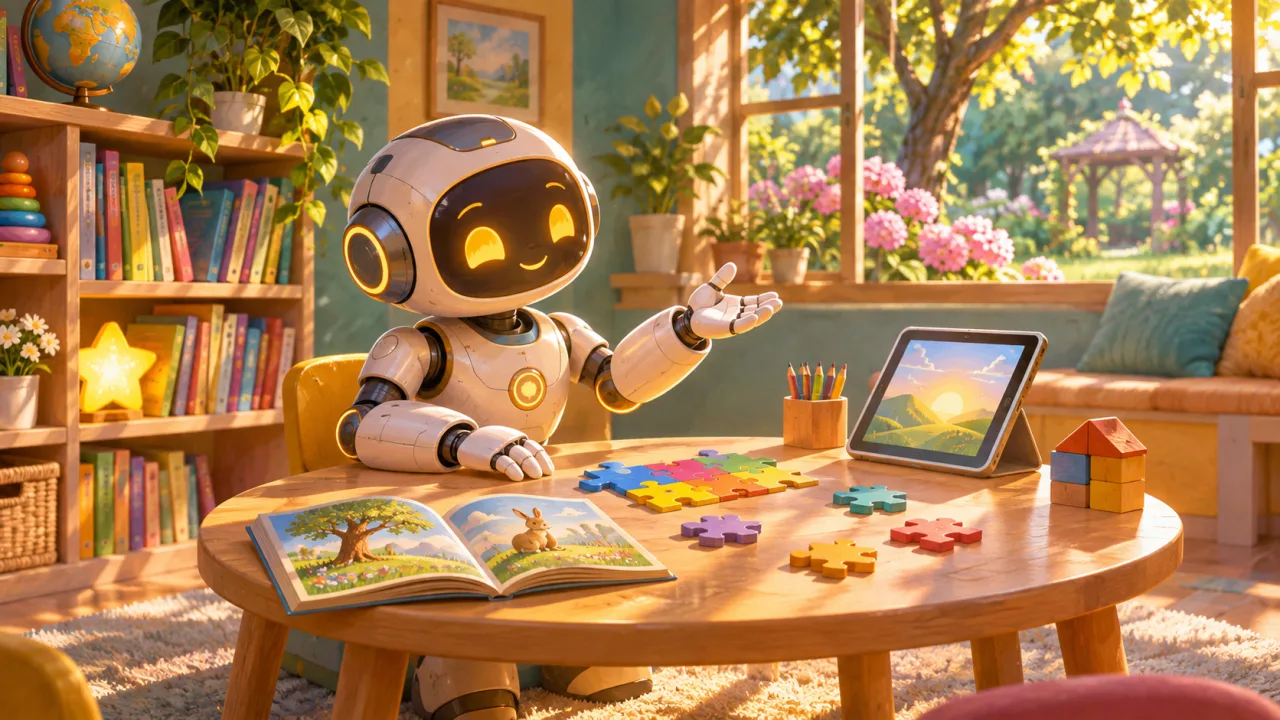
Imagine a therapist who never gets tired, never gets frustrated, never judges, and always responds with the same patience. This isn't a dream - it's what social robots are beginning to offer children on the spectrum, and in 2026, research in this field has taken a significant leap forward. Three independent studies published in recent months - in Autism Research, the International Journal of Social Robotics, and the Annual Review of Control, Robotics, and Autonomous Systems - all reached a similar conclusion: social robots can serve as a genuine and effective support tool for children with autism, especially those with more significant challenges.
How does it actually work? These robots - which look like slightly simplified human figures, or sometimes like animals - are programmed to teach social and academic skills through play and interaction. One study examined a robot called Kebbi that delivers lessons through a tablet screen, and explored whether children with severe autism learn from it just as well as from a human teacher. The findings showed that the robot was especially effective at improving attention and focus. The reason is straightforward - complex, unpredictable human faces can sometimes overwhelm a child. A robot's face, by contrast, is simple and predictable - and that's precisely what makes it feel less threatening. Another study suggested viewing robots not just as a therapeutic tool but as "cognitive support" - a bridge that helps children acquire social skills that they can then transfer to interactions with other people.
What does this mean for an Israeli family? In Israel, waiting for therapy hours is a painful reality that many of you know all too well. Therapies like occupational therapy or communication therapy are often limited in the number of hours that the National Insurance Institute approves. Social robots don't replace the human therapist - the studies themselves emphasize this - but they can add hours of practice at home, without pressure and without fatigue. Robots like NAO and Pepper already exist in special education schools around the world, and preliminary research is underway at several academic institutions in Israel. The technology isn't yet accessible to every household, but the direction is clear.
In the AUTIFACE community, we know that every child on the spectrum is a whole world unto themselves - with their own pace, their own needs, their own way of learning. What's exciting about this wave of research is that the robots aren't trying to change the child - they adapt themselves to the child. That's exactly the approach we believe in: not asking "how do we fit the child to the world," but "how do we fit the tools to the child."
What this means for you
In the near future, social robots may supplement the therapy hours that the state does not fund, allowing children to practice social skills and learning at home - at their own pace and without pressure.
Source: Autism Research