Research
A New, Safe and Protected World: How Virtual Reality Teaches Social Skills
23.06.2026 · JMIR Pediatrics
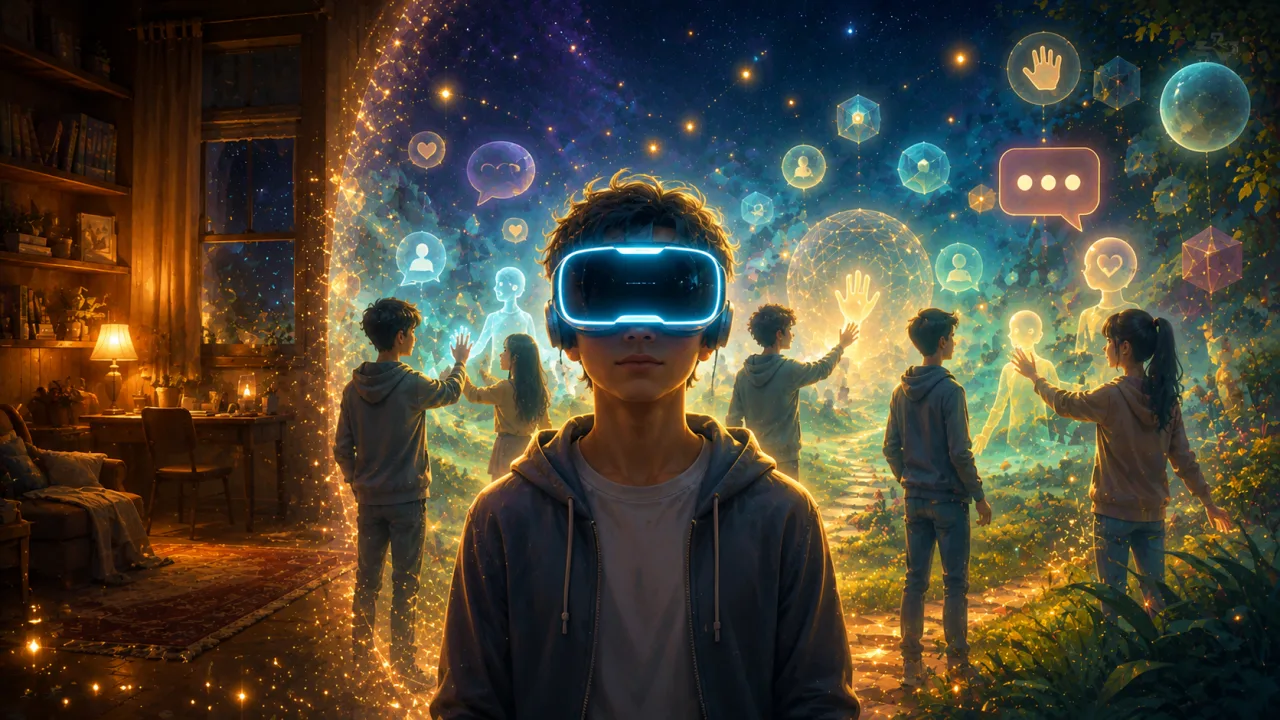
Imagine a child practising a conversation with a friend, walking into a shop, or getting through a first day at work - with no pressure, no fear of making mistakes, and no one watching from the outside. This is not a distant future. This is what virtual reality (VR - a virtual space experienced through computer headsets) already offers today to people on the autism spectrum. Research published in 2026 shows that this technology is not only engaging and interesting - it actually works.
A large systematic review published in the journal JMIR Pediatrics and Parenting in May 2026 examined different types of virtual reality technologies and their effectiveness in improving social communication skills in children on the spectrum. The findings reinforce a trend researchers have been tracking for years: a virtual environment allows a person to practise, again and again, social situations that trigger anxiety in real life. You can step into a school presentation, practise eye contact, respond to an unexpected call - and if something goes wrong, you simply start over. No consequences. No shame.
The reason it works lies in the unique structure of the technology itself. The virtual space can be fully customised to the specific profile of each child: the intensity of sounds, the pace of conversation, the number of characters, the level of visual clarity. The therapist can control the environment in real time, increasing or decreasing the level of challenge, and observing how the person responds. Alongside this, a large clinical trial called STEPS - considered the largest of its kind in the world on the subject of cognitive-social training through virtual reality for autistic adults - continues to recruit participants, with results expected by the end of 2026.
So what does this mean for a family in Israel? The good news is that this technology is becoming more and more accessible. The cost of virtual reality equipment has dropped significantly in recent years, and a number of treatment and special education centres in Israel are already beginning to incorporate it into practice. This is not just about clinical therapy - there are dedicated apps and platforms that can be used at home as well, with the guidance of a professional. It is worth asking your therapist, treatment centre, or school whether such options are available in your area.
What this means for you
Children and adults on the spectrum can practise challenging social situations in a safe environment with no real-world consequences - and step into real life more prepared and with less anxiety.
Source: JMIR Pediatrics