Research
A Brain Breakthrough: A Small Molecule That Could Change the Bigger Picture
26.06.2026 · Nature Communications
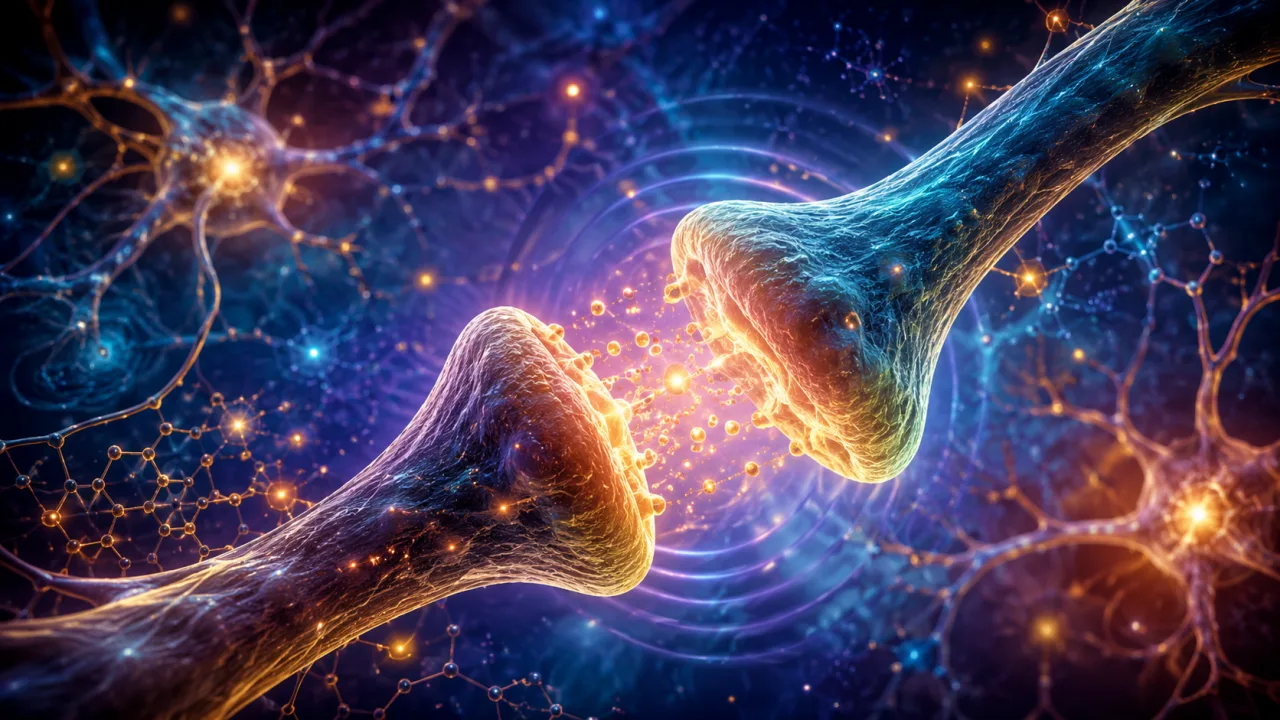
Imagine a tiny switch in the brain that is supposed to help nerve cells communicate with each other - and in some children on the spectrum, that switch simply does not work the way it should. That is exactly what researchers from the Korean Institute for Basic Science (IBS) discovered when they studied one of the central mechanisms in autism development: a brain receptor called NMDA, responsible for learning, memory and social interaction, is not sufficiently active in some people on the spectrum. The study was published in May 2026 in the prestigious scientific journal Nature Communications.
The researchers found that this receptor can be 're-opened' in a smart and precise way: by silencing a small transporter protein called SLC6A20, which is responsible for clearing the amino acid glycine from the environment surrounding the receptor. When glycine remains there in sufficient quantity, the receptor 'wakes up' and begins to function. In experiments on mouse models carrying autism-related mutations (in the SHANK2 and SHANK3 genes), the treatment significantly improved social behaviour and learning responses. Importantly, the results were demonstrated not only in mice, but also in human brain tissue grown in the laboratory - which strongly reinforces the relevance of the findings for humans.
What sets this approach apart is its precision. Earlier attempts to treat a similar problem failed because they affected other transporters located in brain regions responsible for breathing and movement, creating dangerous side effects. This time, the researchers identified a transporter found primarily in higher-thinking areas - the cerebral cortex and the hippocampus - allowing for a more targeted effect with a smaller risk of harming other vital functions.
In Israel, hundreds of families are raising children and adults with mutations in SHANK genes - such as those seen in Phelan-McDermid syndrome. For them, research like this is not just distant scientific news - it is real, tangible hope. The study is still at an early stage and precedes clinical trials in humans, but the path forward is now clearer than ever. The Israeli research community, a leader in the fields of genetics and neuroscience, is closely following developments like these.
At AUTIFACE, we know that every scientific discovery is one more small step on a long road - but a road that keeps moving forward. We are not waiting for one great miracle; instead, we celebrate every advance that brings deeper understanding, better support, and fuller lives for everyone we love.
What this means for you
For families whose children have mutations in the SHANK2 or SHANK3 genes - this research opens a new therapeutic possibility for the future; for now, it is important to follow the clinical trials that will come next.
Source: Nature Communications