Research
The Virtual World That Teaches You How to Live in the Real One
06.08.2026 · Journal of Autism and Developmental Diso…
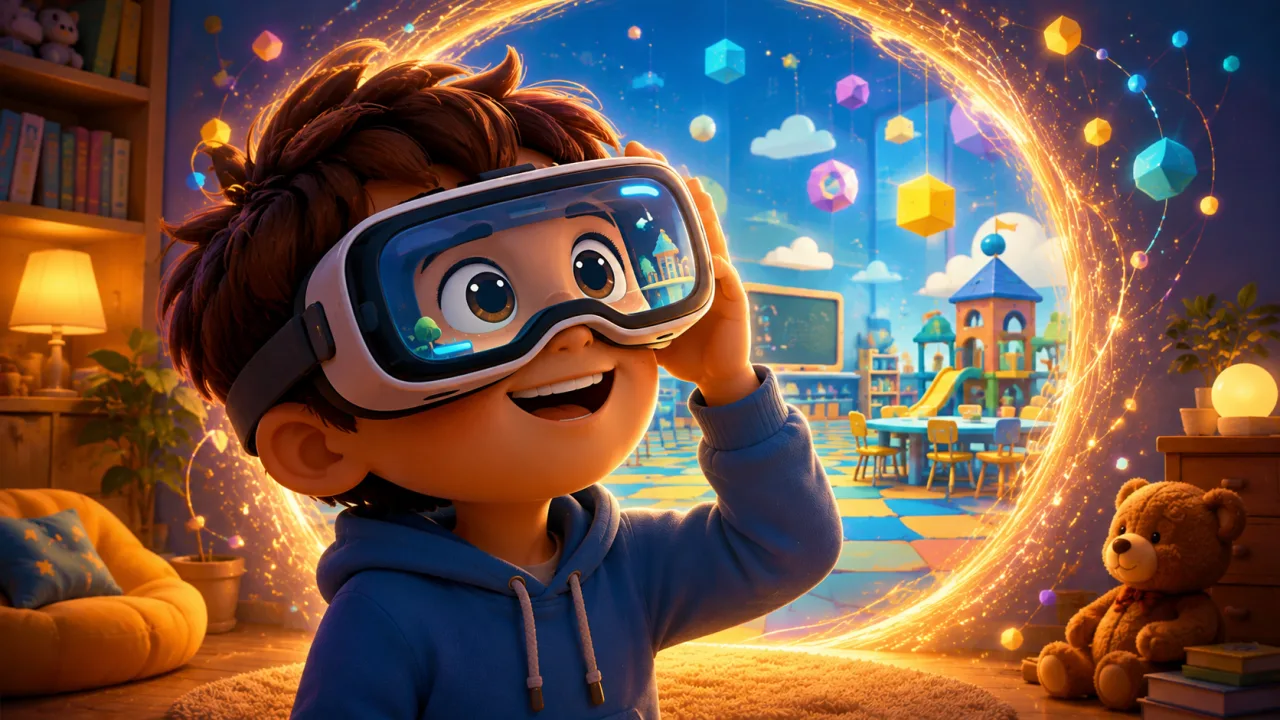
Imagine a child who struggles deeply with talking to strangers, waiting in line, or understanding facial expressions - and suddenly has a place to practice all of it without pressure, without judgment, without the fear of failure. That is exactly where virtual reality technology - VR - comes in. Studies published in 2026 show that this field is no longer a distant future: it is happening right now, in clinics and schools around the world, and Israel is beginning to take notice as well.
How does it work? The child puts on a VR headset and enters a virtual world built specifically for them - maybe a classroom, maybe a playground, maybe a store. There, they can practice social situations with digital characters, hear questions, respond, and navigate a range of facial expressions. A study recently published in the scientific journal Journal of Autism and Developmental Disorders, which reviewed 31 studies in the field, found that apps like FaceMe and GameBook help children learn to recognize facial expressions and manage social interactions within enjoyable gaming environments. The implication: learning happens through play, and that already sounds like something completely different.
What sets this new generation of tools apart is personalization. Another study published this year in an international scientific journal described an adaptive VR system - meaning a system that adjusts itself in real time based on the child's performance. If a child struggles at a certain stage, the system slows down, adds cues, and offers encouragement. If they succeed - it challenges them a little more. This is exactly the approach Israeli families are familiar with: every child on the spectrum is a world of their own, and only treatment that is tuned to them will truly work.
In Israel, the field is beginning to gain visibility. Occupational therapy clinics, child development centers, and various nonprofits are starting to incorporate VR tools alongside traditional therapies. Accessibility is still uneven across the country, and the cost can be a barrier - but the trend is clear. And just as importantly: research shows that children on the spectrum sometimes prefer the virtual environment over classic therapy, because there they feel in control, and safe enough to try.
What this means for you
For any parent looking for additional ways to support their child - it is worth asking your occupational therapist or clinical psychologist whether VR tools are available at the center you attend. This technology does not replace any existing therapy - it simply adds another layer of safe, enjoyable practice.